

2025 could be defined as a year of broad diplomatic setbacks to global decarbonisation, energy security, and air pollution mitigation. However, there were bursts of positive action on numerous regional, country, or sectoral levels.
Immediately after taking office, US President Donald Trump withdrew the United States from the Paris climate accord for a second time. The new administration also halted access to US embassy air monitoring data abroad, weakening air quality monitoring efforts in 44 countries across the globe and leaving six without any monitoring at all.
In the meantime, China made history with cleantech investment that saw wind and solar under construction double the rest of the world combined, helping the country to reach an installed capacity of 1,200 GW six years ahead of the government’s schedule.
In Europe, Moscow sustained its brutal invasion of Ukraine, its war machine churning through the country as profits from sanctioned fossil fuels continued to find creative ways into Putin’s war chest.
Ahead of COP30, Indonesia set astonishingly bold new decarbonisation targets, projecting that the country’s emissions will peak by 2030 with aims to achieve up to 72% renewable energy share in the national supply by 2060. However, closer looks at these plans showed that they still left ample room for fossil fuels like coal, making the new net zero targets very challenging to reach under the proposed policy.
2025 was also a year of dissonance in environmental policy for India — while the country experienced a significant boom in renewable energy capacity — driven primarily by a surge in solar power installations — air pollution from harmful fine particulate matter (PM2.5) concentrations was found to represent a widespread, year-round crisis, not merely an urban or seasonal issue.
In step with these trends, CREA’s work expanded across regions and sectors with data unearthing life-changing energy and air pollutants trends. This empowered policy advocates, diplomats, law firms, and grassroots movements to push back on cascades of misinformation and nudge the needle one tick closer to a world where clean energy and clean air are everyone’s birthright.
CREA shines a light on China’s emissions progress
CREA shared key insights on China’s emissions peak and target expectations
In 2025, CREA’s quarterly analyses, benchmarking, and annual reports assessing trends across sectors encouraged engagement and further discourse on China’s green targets with relevant stakeholders across Europe and China.
In Q1 2025, CREA’s analysis of the clean energy contribution to China’s GDP was published and has become one of CREA’s most referenced reports to date, showcasing the economic imperative of the clean energy sector, especially in the context of headwinds against the green transition around the world.
At the same time, CREA’s global benchmark of 30% emission reductions for China’s 2035 Nationally Determined Contribution (NDC) — publicly quoted by EU Ambassador Jorge Toledo — became a key reference point for international policymakers and diplomats in their engagement with China and for journalists reporting on the topic.
The former Chinese vice finance minister also referenced CREA’s analysis on China’s emissions going down, saying the country will likely peak a few years before 2030.
CREA’s biannual coal power analyses — produced together with Global Energy Monitor (GEM) — remained go-to sources for tracking China’s coal power development. Toledo publicly quoted the H1 2025 biannual coal report at a high-level conference in Beijing, raising concerns over China’s continued coal buildout.
China’s 2025 steel policy echoes CREA’s long-standing reset pathways
CREA’s H1 2025 industry steel review offered various reset pathways for an industry facing an ongoing production glut along with potentially missed green steel targets.
Accordingly, new policy on the steel sector in H2 2025 gave the control of steel capacity and output a much more prominent place, in addition to stronger encouragement for cleaner electric arc furnace and hydrogen metallurgy technologies. These changes coincided with a 4.4% year-on-year decline in China’s crude steel output in 2025, bringing production below 1 billion tonnes for the first time in six years and representing the largest annual contraction in recent years, providing clear evidence that elements of the reset are beginning to take hold.
China adjusts air quality standards to same as CREA’s recommendation
CREA also remained focused on China’s air pollution in 2025. CREA’s Q1 China Air Quality Analysis revealed that while Chinaʼs national average PM2.5 concentration declined by 5% in Q1, ten provinces recorded year-on-year increases—all of them outside of Chinaʼs priority control regions for air pollution, and most of them in the west of the country.
In addition, CREA advocated for tightening the national PM2.5 air quality standard in line with the World Health Organization’s second interim target, before China’s next five-year plan took shape. In December, the MEE rolled out a draft revising China’s air quality standard, proposing to lower the PM2.5’s standard to 25 ug/m3, a change consistent with CREA’s recommendation.
CREA levels the playing field by plugging Russian fossil fuel loopholes
EU closes sanctions loopholes in line with CREA recommendations
In 2025, CREA’s evidence, monthly reporting, and robust outreach work played a highly significant role in the EU’s efforts to seal loopholes in Russian fossil fuel sanctions throughout 2025 and defund the Kremlin’s war chest.
CREA’s report on the third year of the invasion revealed that EU imports of Russia had surpassed the EUR 18.7 bn in financial aid the EU sent to Ukraine in 2024. This was brought to the attention of the Vice President of the European Commission, Kaja Kallas, in an interview on BBC Newsnight, and even caught the attention of US President Donald Trump, who posted it on his Truth Social account.
The 18th sanctions package implemented by the EU on 18 July 2025 included several recommendations similar in substance to those that had been proposed by CREA. Evidence presented to the EU sanctions envoy by CREA may have supported the efforts that led to the sanctioning of refineries in third countries.
In September, the European Parliament reached a broad, cross-aisle agreement on its proposed amendments to the Russian fossil fuel phase-out plan. Natural gas — a target specifically advanced by CREA — formed a notable addition.
And in October, the UK unleashed the strongest sanctions yet on Russia, announcing it will ban imports of oil products made from Russian crude directly target oil giants Rosneft and Lukoil. With the support of numerous briefings and publications produced on the UK refining loophole, CREA maintained ongoing communication with the UK Foreign Office in the lead up to this announcement.
Taiwan to divest from Russian naphtha
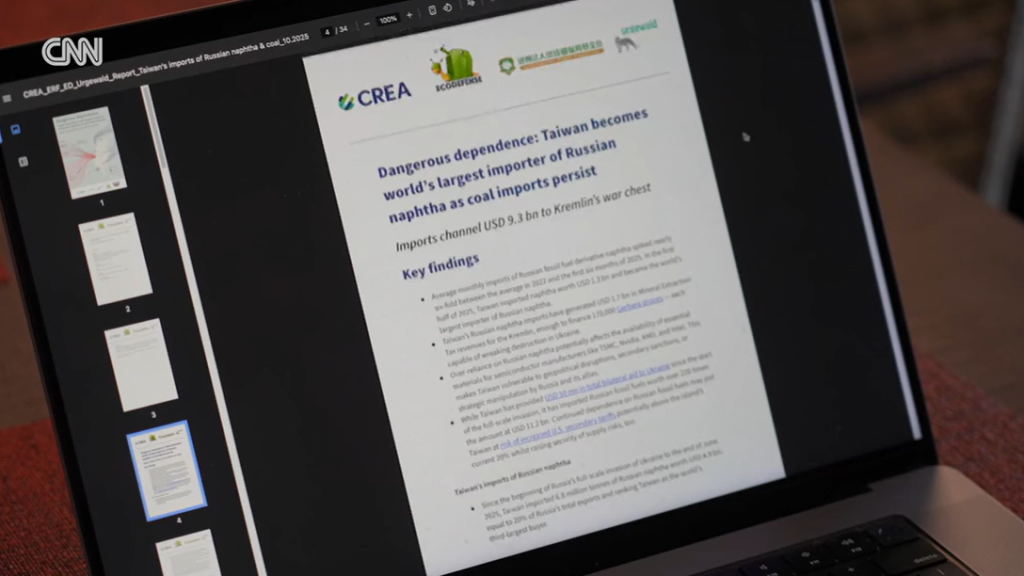
In September, CREA, in collaboration with the Environmental Rights Foundation, Urgewald, and Ecodefense, released an analysis revealing that in the first half of 2025, Taiwan became the worldʼs largest importer of Russian fossil fuel derivate naphtha, valued at USD 1.3 billion. Following extensive coverage by local and international media such as CNN and strong coordination with local legislators, Taiwan’s economics ministry told the press that the private company serving as the island’s largest naphtha buyer had agreed to end their imports, cutting over EUR 200 million in Russian exports each month.
Other notable achievements made in tandem with CREA’s work include a UK ban on maritime services for Russian LNG exports in November, as well as Czechia announcing it will end its imports of Russian crude oil through the Druzhba pipeline after 60 years of reliance. What’s more, CREA’s rigorous data analysis and persistent advocacy directly influenced the Australian Government’s investigation into oil products refined from Russian crude.
And in December, the EU published a declaration well in line with CREA’s work and recommendations making full use of the international law of the sea framework to address threats from the ‘shadow fleet’, flagless vessels, and to protect critical undersea infrastructure.
CREA seeks to advance policy coherence in Indonesia’s dynamic energy transition
In 2025, CREA moved beyond tracking Indonesia’ energy transition to unmasking the systemic disconnects threatening it. By exposing the nation’s ‘fossil-first’ agenda, CREA provided the technical evidence necessary to hold policymakers and stakeholders accountable to the nation’s 2030 emissions peaking commitments.
CREA aligns high-level ambition with ground-level reality, providing a technical anchor amid shifting national priorities
CREA maintained a strategic pulse on Indonesia’s shifting energy landscape, delivering timely analysis and thought pieces to bridge President Prabowo’s lofty visions — including a 2040 fossil power phase-out and a massive 100 GW solar rollout — into concrete implementation plans. Throughout 2025, CREA specifically urged Indonesian stakeholders to scrutinise the nation’s persistent ‘fossil-first’ trajectory. Despite ambitious rhetoric, current 10-year grid planning outlines a combined 40% increase in coal and gas power generation while simultaneously lowering near-term clean energy targets.
Beyond the national grid, CREA, in collaboration with Global Energy Monitor (GEM), revealed the sheer scale of Indonesia’s industrial captive coal power, which has surged to 19.3 GW. With projects in the pipeline set to push the total to over 31 GW, this capacity now rivals Germany’s entire coal fleet. These off-grid plants operate with minimal oversight, jeopardizing Indonesia’s economic goals and international emission commitments. CREA continues to call for urgent transparency and the inclusion of these hidden ‘out of sight’ emissions in national caps to prevent them from undermining the country’s entire energy transition.
CREA urgently called for prioritisation of renewables, highlighting the missed opportunity in fast-tracking prospective projects and the urgent need to integrate President Prabowo’s 100 GW solar vision into concrete implementation plans. Such a shift is essential for solar to serve as the primary engine helping the nation reach power sector peak emissions before 2030.
CREA asserts necessity of considering public benefits from avoided emissions and air pollutants
In 2025, CREA continued to help unmask the catastrophic health and economic burden of Indonesia’s coal plants.
While CREA modeled that retiring the Cirebon-1 plant seven years early would save 6,400 lives and USD 4.4 billion in health costs, the government recently considered cancelling the pilot due to high take-or-pay penalties and a long remaining lifespan. CREA further cautioned that false solutions — specifically biomass co-firing — offer negligible improvements to air quality, serving only to prolong coal dependency.
Moreover, CREA released coal plant-specific data in the Toxic Twenty report — produced with domestic partners Trend Asia and CELIOS — projecting that the plants’ continued operation would cause 156,000 premature deaths and USD 109 billion in economic losses by 2050.
Beyond individual coal power plants, CREA advocated for a nationwide, cross-sectoral intervention through a national clean air action plan. CREA urged the government to move beyond a ‘wait-and-see’ approach regarding Jakarta’s chronic pollution, which broke WHO limits tenfold in 2025.
CREA also underscored the importance of international cooperation, calling on the Just Economic Transition Partnership (JETP) Secretariat to include captive coal power in emission caps, and to strategically direct Indonesia-China relations toward clean energy manufacturing and renewables projects rather than traditional coal financing.
Finally, CREA tied these collective calls to the public stage through an opinion piece warning that Indonesia is “betting its future, years, and lungs on coal.” By quantifying the severe trade-offs of coal dependency, CREA continues to advocate for a transition that prioritises renewables as the primary engine to reach power sector peak emissions before 2030.
CREA research forms the bedrock of air pollution and energy discourse in India
CREA data powers public discussion as government retreats from pollution control targets
In July, India’s environment ministry diluted the nation’s compliance deadline to install critical flue gas desulfurisation (FGD) technology at coal-based power plants. CREA published consistent reporting on the situation throughout the year, which, due to frequent citing by domestic media in combination with amplification on our analyst’s social media profiles, prompted a direct comment on the research from the environment ministry.
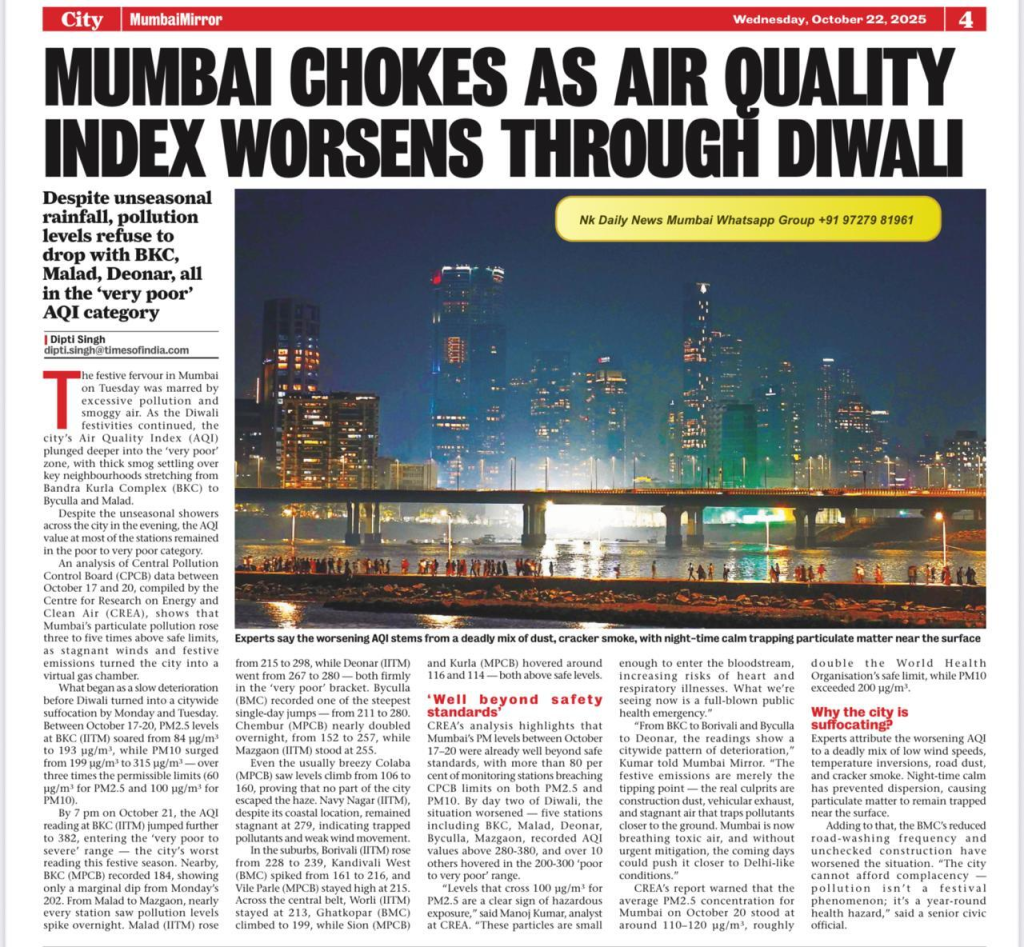
CREA also showed that harmful PM2.5 concentrations represent a widespread, year-round crisis, not merely an urban or seasonal issue, based on CREAs new data product generated by satellite-based machine learning model. Relying on reanalysis data, it was shown that close to half of the country’s PM2.5 burden is chemically formed in the atmosphere from precursor gases, particularly SO2 from coal-fired power plants. The reports, along with CREA’s monthly Indian air pollution snapshots, became the top go-to reference for journalists reporting on India’s air pollution situation in 2025.
CREA reveals India’s grid can support growing energy demand without increasing coal capacity
While debunking misinformation on India’s air pollution crisis, CREA concurrently brought attention to India’s renewables boom and the country’s burgeoning capability to meet its growing power demands with wind and solar power.
CREA’s analysis for Carbon Brief in September demonstrated that India’s CO2 emissions from its power sector fell by 1% year-on-year in the first half of 2025 and by 0.2% over the past 12 months, only the second drop in almost half a century. The analysis also showed that India’s power sector emissions could peak before 2030, if clean-energy capacity and electricity demand grow as expected.
Health impact assessments (HIAs) take accountability to new sectors and geographies
Bangladesh announces new AQ monitoring initiatives less than a month after CREA releases HIA
CREA’s health impacts assessment (HIA) team got off to a robust start in January 2025 with the publishing of the first report and dashboard to meaningfully track the connection between air pollution and public health in Bangladesh. The analysis found that PM2.5 is responsible for over 100,000 deaths in the country annually, related to ischemic heart disease, stroke, chronic obstructive pulmonary disease, lower respiratory infections, and lung cancer. Children under five are especially vulnerable, with over 5,200 deaths annually attributed to PM2.5-related lower respiratory infections.
Launched via a press conference and online campaign with partners Global Strategic Communications Council (GSCC) and the Center for Atmospheric Pollution Studies (CAPS), the report garnered significant media coverage. Less than a month later, the government announced plans to install eight Continuous Air Monitoring Stations at strategic roadside locations in urban hotspots for the first time, an action that lines up with the report’s highlighting of transportation as a major source of pollutants.
Landmark HIA on Europe’s diesel emissions followed by legal action against France, top carmakers
Almost 10 years after the original Dieselgate scandal, CREA’s HIA teamed up with environmental law firm ClientEarth to release a report providing the most comprehensive picture to date of the lingering health and economic impacts likely linked to the use of prohibited defeat devices in cars in Europe. The analysis looked at suspiciously high nitrogen oxides (NOx) emissions that are well above the legal limits and evaluates the impacts of such emissions on public health and the economy across the UK and EU.
Less than six months later, the French government was taken to court after a ‘decade of inaction’ on Dieselgate, and amajor lawsuit was brought against five leading carmakers accused of cheating on emissions tests was opened at the High Court in London.
CREA also published a world first global analysis of the health and economic impacts of emissions from major truck manufacturers. This research has underpinned the global Idle Giants campaign, which is calling on truck manufacturers to commit to zero-emission vehicles.
South Africa HIA helps to tighten the reins on state coal fleets
In June, CREA released an HIA with Greenpeace Africa showing that in 2023 alone, 42,000 South Africans lost their lives due to exposure to PM2.5, including over 1,300 children under the age of five. The report also notes that the coal fleet of Eskom — the state energy company — remains one of the worldʼs largest contributors to deadly air pollution, with some facilities continuing to apply for exemptions from pollution limits meant to protect public health.
Five months after the publishing of the report — which was used by Greenpeace Africa’s demonstration outside the Department of Forestry, Fisheries and the Environment — the plug was temporarily pulled on a planned Eskom 3,000-megawatt gas-fired power plant. Originally ruling in favour of Eskom in 2022 to proceed with construction, the South African Supreme Court of Appeal reversed that ruling, citing, among other factors, ‘…the failure to adequately consult local residents and consider the full impacts of the power plant’s entire life cycle on climate change’.
Shortly after, environmental groups sued to overturn a decision by South Africa’s environment department allowing Eskom to breach air-pollution limits.