
In early June, the value of the Indonesian rupiah fell to a record low against the US dollar, driving up imported food and fuel costs, accelerating inflation, forcing interest rate hikes and raising the cost of paying off foreign currency debt. The underappreciated driver of Indonesia’s currency crisis is fossil fuel dependence and subsidies, with budget deficit and a weakening trade balance playing a critical role and fossil fuels at the heart of the matter.
Fossil fuel dependence is a key driver of Indonesia’s crisis: the rise in the oil and gas import bill has decimated the country’s trade surplus, while fossil fuel price subsidies total around 13% of the state budget and 2% of the GDP.
Fossil fuel consumption subsidies, including budgeted losses to state-owned power and oil companies stemming from artificially low prices, will balloon to a projected USD 23bn this year, which is 10% of the national budget and a whopping 1.5% of the GDP.

Indonesia also cross-subsidizes domestic coal consumption to the tune of USD 6bn/year by forcing coal mining companies to sell at a discount to the national power company and other domestic consumers. If the same income transfer was made by taxing coal exports, it would boost government fiscal revenue by 4%.
Another key source of pressure on the currency is the weakening trade balance. The oil and gas import bill jumped 83% year-on-year in April while exports fell in value. As a result, the country’s usual trade surplus disappeared almost completely, plummeting to the weakest point since 2020.
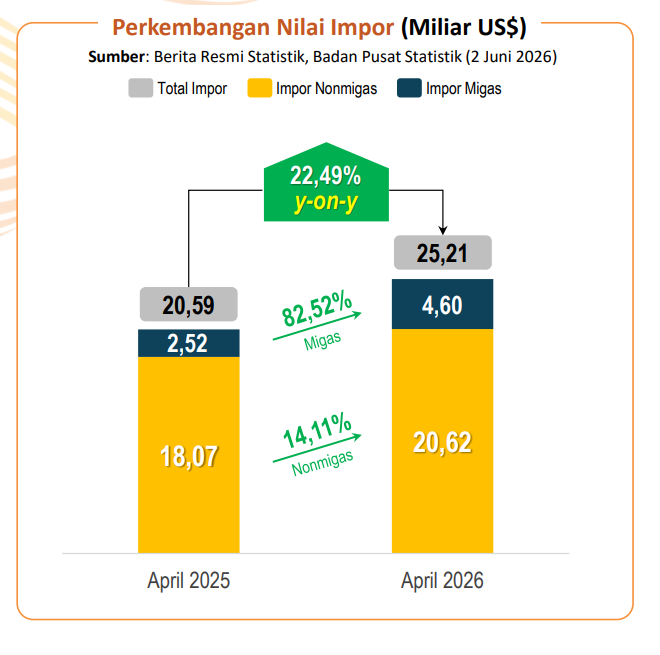
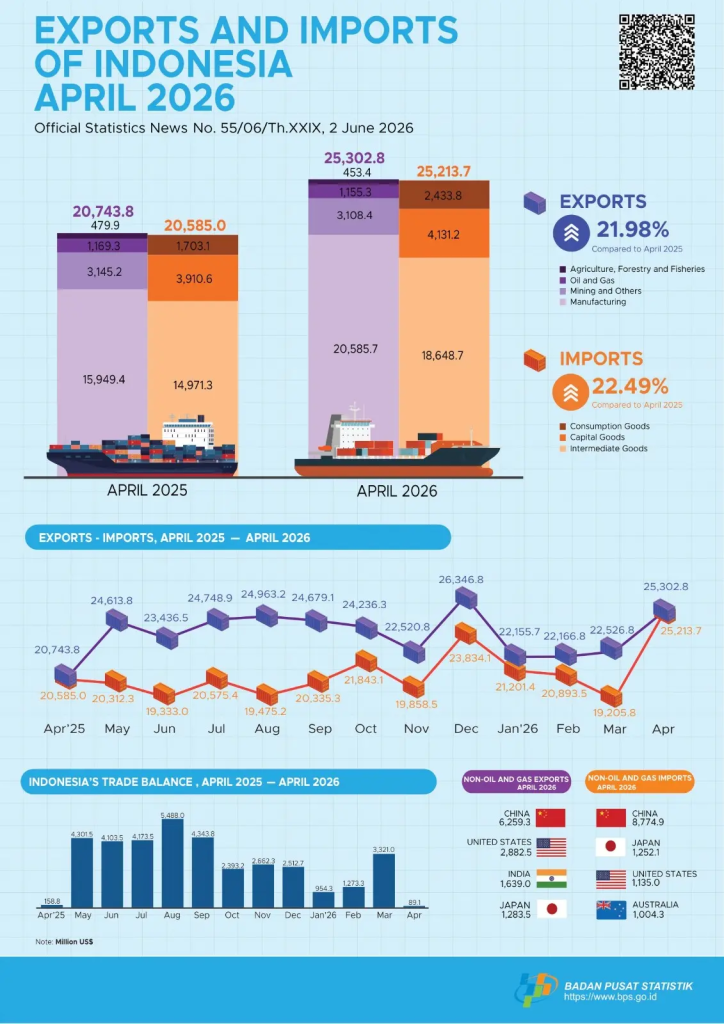
Year-on-year changes in the value of Indonesia’s imports in April 2026, and an overview of foreign trade up to April, from Statistics Indonesia. (Migas=Oil&gas.)
The spike in oil prices hurts Indonesia because the net imports of oil and gas have already been rising steadily for years, reaching an all-time high in January 2026, just before the current crisis. This is driven by both the rise in consumption and decline in domestic production.
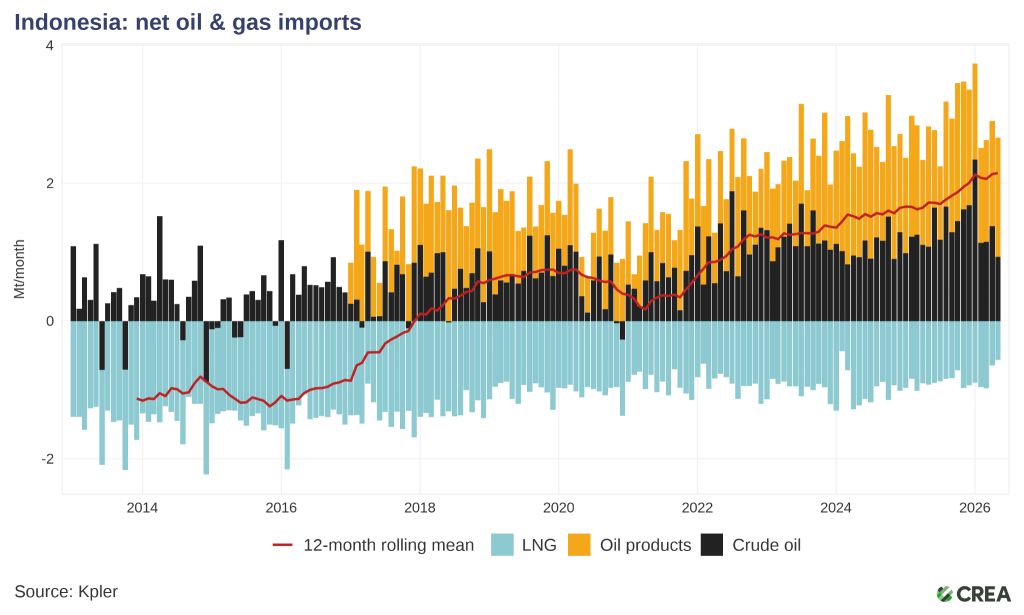
Net oil and gas imports in April and May also hit new records for the months after the Hormuz crisis was in full swing.
The share of clean, non-fossil power generation has barely increased in Indonesia over the past decade, and now lags well below the ASEAN average and other major Asian economies, a result of the state-owned utility being locked in to subsidized coal.
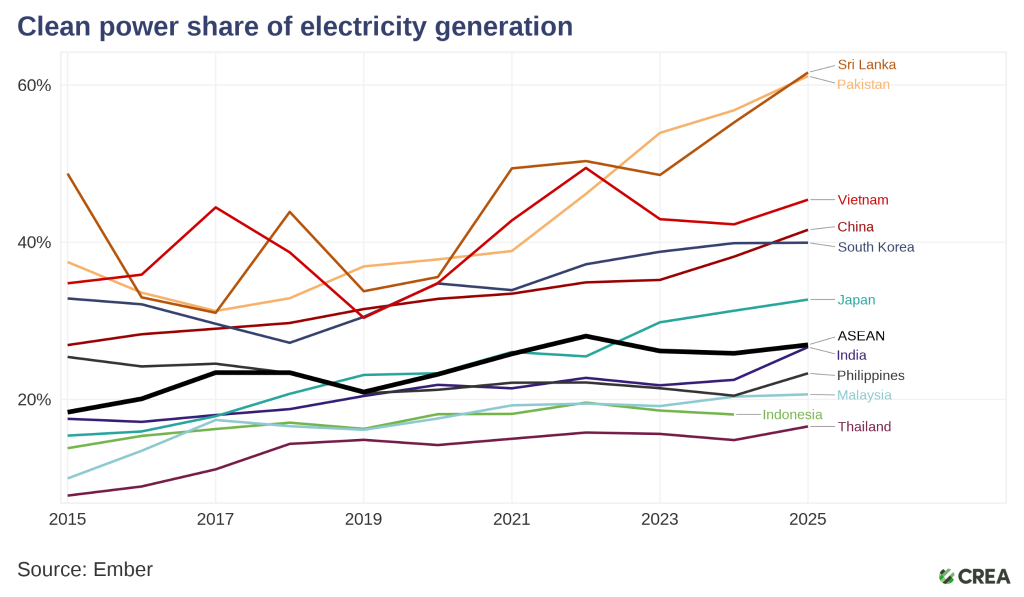
Unlike many other Asian economies, Indonesia also increased domestic gas consumption after the 2021-22 gas crisis, and has massive plans for gas-fired power plants over the next decade.
Clean energy growth has lagged far behind growth in energy demand, with fossil fuels filling the gap. There are hopeful signs however: the crisis seems to have given president Prabowo’s ambitious 100GW solar initiative the push it needed, and electrification is accelerating.
Electrification, replacing the direct use of fossil fuels and biomass with electricity, is the key way to eliminate reliance on dirty fuels in transport, industry and households. Indonesia has made progress on electrifying its energy use, but lags behind the leaders in Asia, including Vietnam, Malaysia and China.
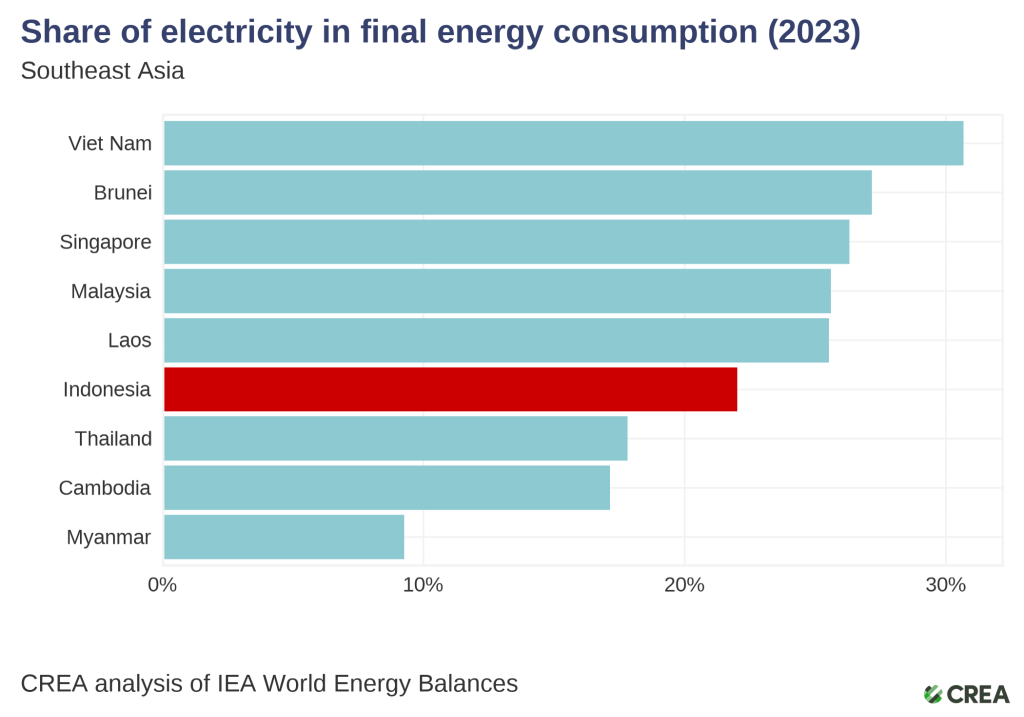
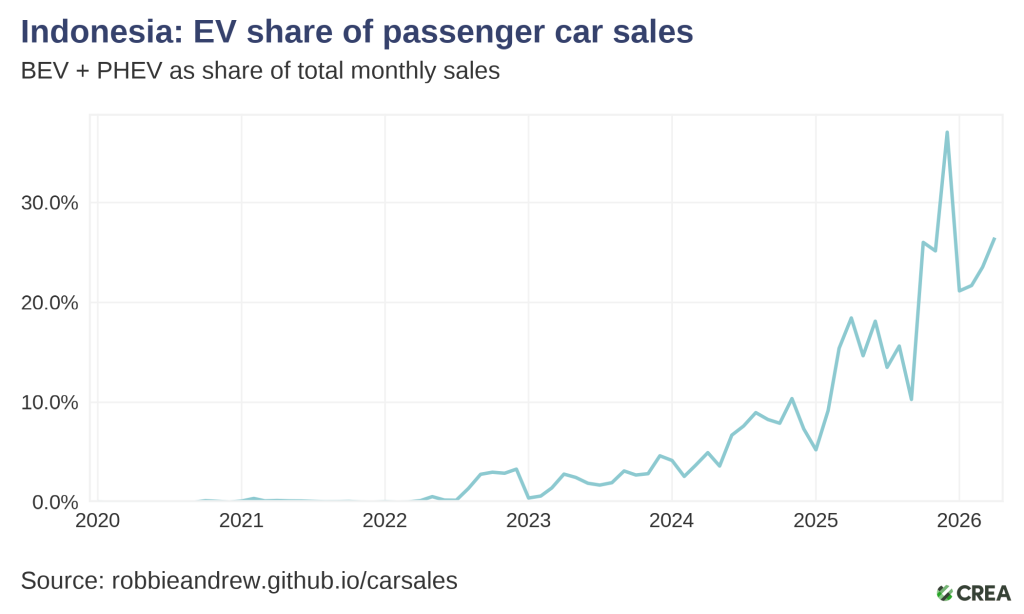
Until recently, EV sales in Indonesia were far behind the Asian leaders, Vietnam and China, held back by subsidized fuel prices. This is changing as EV sales have been on a tear recently. It was too little too late to avert the current crisis but will help future-proof the country.
Recent responses by Indonesia’s leadership have been mixed, with a push to buy more Russian oil on the one hand and to advance the ambitious solar programme on the other.
A thorough reckoning with the role of fossil fuels in the crisis will help calibrate the response.