Taiwan has long been a central hub in the global electronics and semiconductor industry. According to a Trendforce report, four of the world’s top ten wafer foundries are Taiwanese companies, collectively accounting for over 70% of the global market (TrendForce, 2025). Among them, Taiwan Semiconductor Manufacturing Company (TSMC) ranks first globally, while United Microelectronics Corporation (UMC) is ranked fourth. As artificial intelligence development accelerates, it has further expanded this industry: Taiwan now also produces the hardware that powers artificial intelligence (AI) data centers, including advanced semiconductors and server units. This manufacturing is extremely electricity-intensive, placing growing pressure on Taiwan’s already heavily burdened national power grid.
In 2023, Taiwan’s government-owned utility, Taiwan Power Company (Taipower) generated 34% of its electricity from coal and 44% from natural gas, with renewables making up only a modest share of the mix (Taipower, 2025). Under the government’s Energy Transition Goals, the share of coal is planned to fall to 20% by 2030, while gas is expected to rise to around 50% (MOEA, 2025). Renewable energy (RE), led by offshore wind and solar photovoltaics, is projected to expand rapidly.
Even with these expansions, RE is only expected to make up around 30% of the electricity mix by 2030, leaving Taiwan heavily reliant on fossil fuels. This trajectory risks locking in air pollution and carbon emissions at a time when clean alternatives are increasingly affordable.
In this study, we assess the air-quality impacts of Taiwan’s projected 2030 electricity demand from its electronics manufacturing (EM) industry under a range of energy scenarios.
Key findings
- Under a “current-mix” scenario, assuming renewable energy (RE) procurement by Taiwan EM companies persists at the 2023 level, we estimate that air pollution attributable to Taiwan’s EM industry in 2030 would be linked to 90 premature deaths, 277 children suffering from asthma, nearly 19,000 work absences, and almost USD 500 million in health-related economic damages.
- In this scenario, the largest impacts are concentrated in Taiwan’s highly industrialised and urbanised counties, including Kaohsiung (USD 114 million), New Taipei (USD 64 million), Taichung (USD 52 million), Taoyuan (USD 48 million), and Tainan (USD 47 million).
- Three leading semiconductor companies, TSMC, Micron, and UMC in Taiwan have set renewable energy procurement targets or have made purchases for 2030. If these targets can be further accelerated, the air-quality impacts would be substantially reduced, saving around 41 lives per year and USD 229 million per year.
- TSMC, which has the highest renewable electricity target for 2030 (60%), would account for almost USD 169 million in avoided health damages.
- Overall, we conclude that as Taiwan’s electricity demand rises with the expansion of the artificial intelligence (AI) industry, replacing fossil fuels with clean renewable energy sources delivers substantial public health benefits by reducing air pollution exposure.
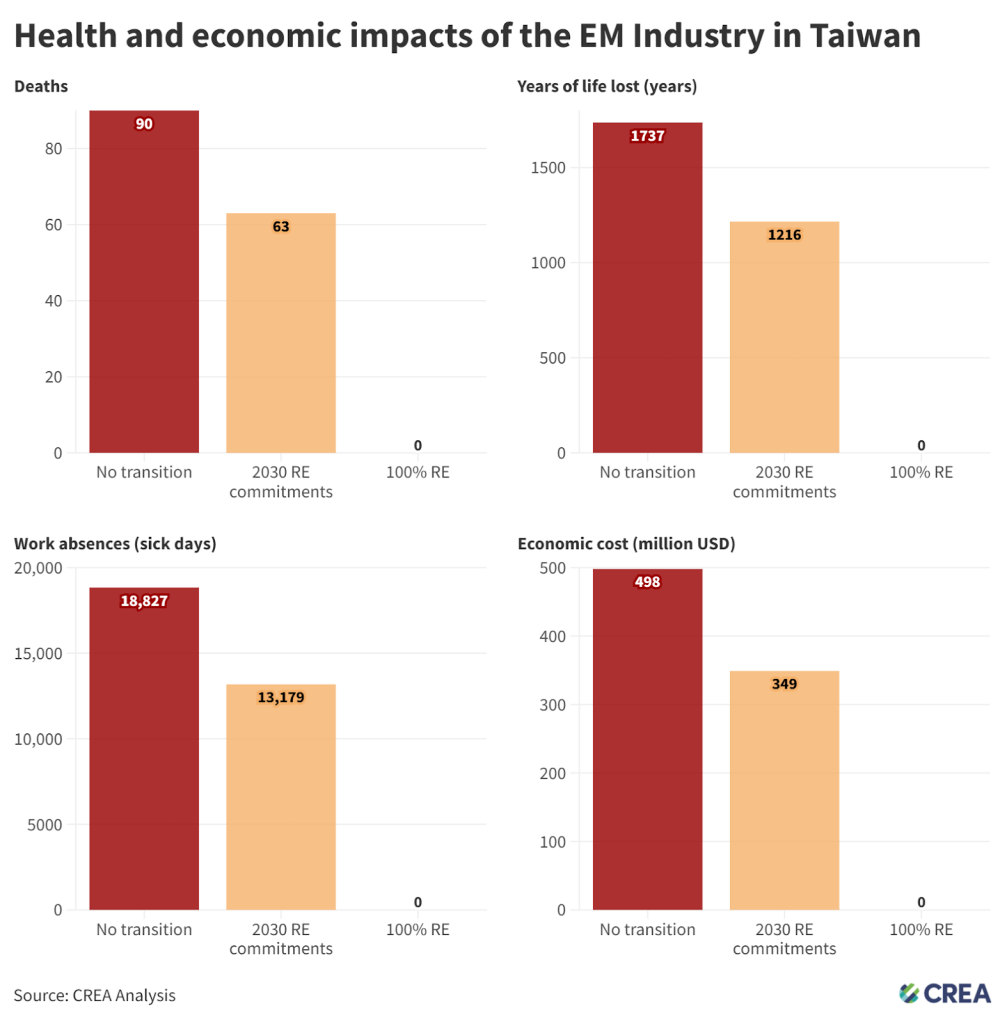
Figure 2 – Health and economic impacts of electricity supply scenarios for the EM industry in 2030
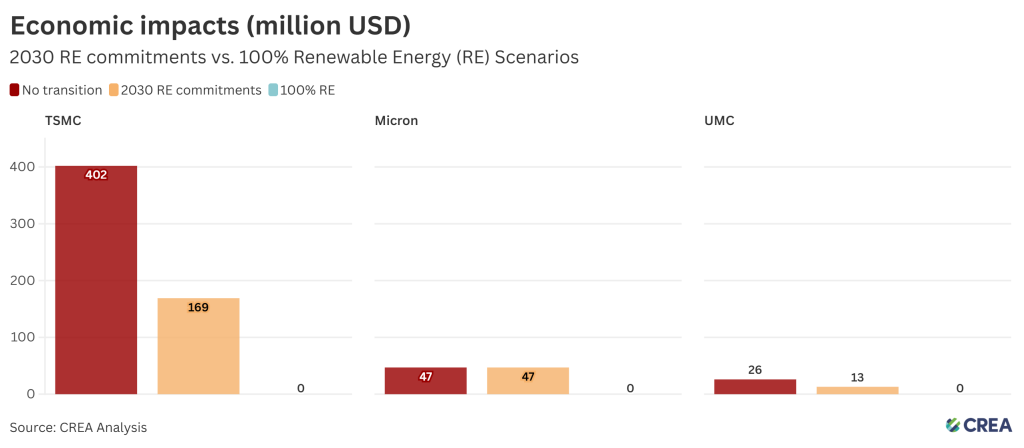
Figure 4 – Economic impacts of the EM industry in 2030; under three different renewable energy scenarios.
Policy and corporate action recommendations
- Accelerate existing targets: Achieve 100% renewable energy by 2030 and strengthen local green power
Review and enhance Taiwan’s current energy transition targets, setting 2030 as the milestone for 100% renewable energy (RE100) and providing a transparent, trackable roadmap to reduce fossil power related health and economic impacts. - Steadily increase RE use to reduce health and economic impacts
Energy transition should not focus only on long-term goals; RE use should increase year by year. Annual improvements can immediately reduce pollution from fossil fuels while decreasing related healthcare and economic costs, delivering measurable public health benefits. - Invest in local RE and storage to reduce pollution and ensure stable power supply
Direct investment in Taiwan’s local RE and storage can reduce air pollution and public health risks, increase green power supply, and mitigate electricity shortages. Coupled with energy storage, these measures enhance grid resilience, ensure stable electricity supply, and support the growing demand from AI and electronics manufacturing. - Protect more vulnerable groups.
Children bear a disproportionate burden from fossil fuel pollution, with high rates of asthma incidence and prevalence. Policies targeting reductions in Taiwan’s NO₂ emissions and investments in cleaner air should be framed as a matter of children’s rights as well as public health.