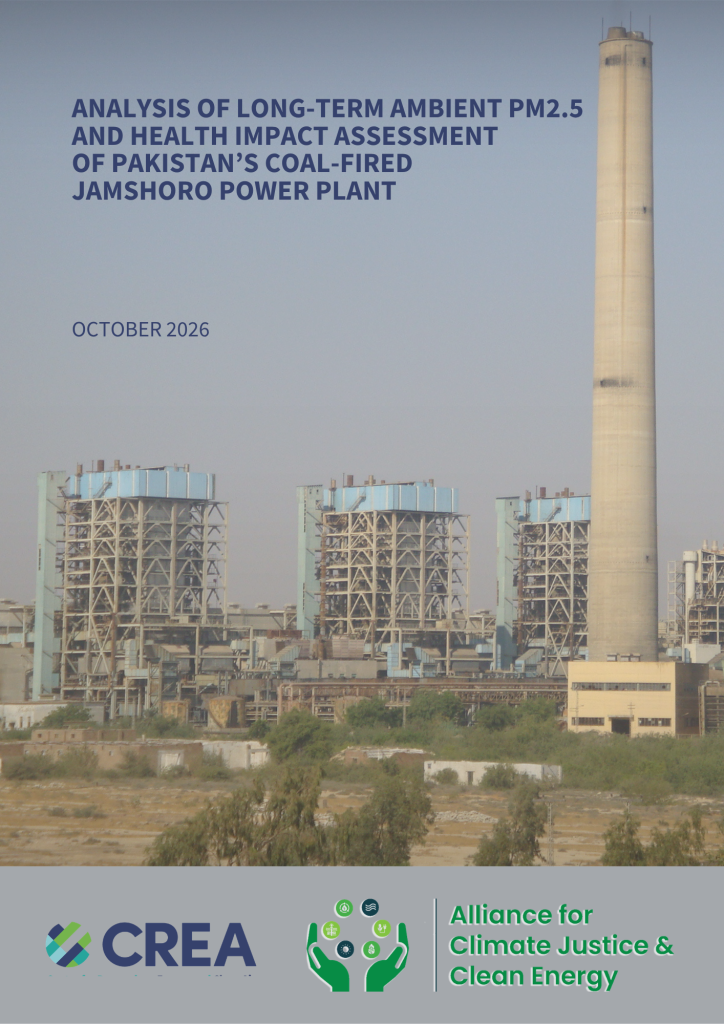
Thermal power generation is a major source of air pollution, emitting particulate matter (PM2.5 and PM10), sulphur dioxide (SO2), nitrogen oxides (NOx), carbon monoxide (CO), volatile organic compounds (VOCs), and greenhouse gases. These pollutants contribute to poor air quality, increase the burden of respiratory and cardiovascular diseases, and accelerate climate change. Coal-fired power plants are of particular concern because, in addition to directly emitting particulate matter, they release precursor gases that form secondary PM2.5, allowing pollution to persist in the atmosphere and affect communities far beyond the plant boundary.
Pakistan’s Jamshoro district hosts one of Pakistan’s largest concentrations of thermal power generation, with coal-, furnace oil-, and gas-fired power plants located within a relatively small geographic area. This has raised concerns about long-term air quality and population exposure to particulate pollution in the surrounding region, including nearby rural communities.
This analysis combines more than two decades of satellite-derived PM2.5 observations around the coal-fired Jamshoro Power Generation Project with a quantitative health impact assessment (HIA) to evaluate the long-term public health implications of different fuel-use scenarios. Together, these analyses provide updated evidence to inform future environmental decision-making and the need for reassessing the existing environmental impact assessment (EIA).
Five units are located within the coal-fired Jamshoro Power Generation Project. However, four of them have been delicensed. This analysis focuses on the remaining operational unit at the coal-fired Jamshoro Power Generation Project.
The study uses the coordinates of this specific plant, where a higher proportion of lignite is considered in the fuel blend, to assess annual average PM2.5 concentrations within 5 km, 25 km, and 50 km, from 1998 to 2023.
The distance buffers are measured from the coordinates of the specific remaining operational unit assessed, referred to as the Jamshoro Thermal Power Plant.
Key findings:
- Long-term satellite observations from 1998 to 2023 show that annual average PM2.5 concentrations remain persistently elevated around the coal-fired Jamshoro Power Generation Project, with pollution extending well beyond the immediate vicinity of the plant, indicating sustained exposure for surrounding communities.
- A health impact assessment (HIA) of the one remaining operational unit at the coal-fired Jamshoro Power Generation Project finds that replacing the current fuel mix with 100% domestic lignite could nearly double premature deaths, years of life lost, and several major disease outcomes attributable to PM2.5 exposure over the 2025–2049 assessment period.
- The 2013 Environmental Impact Assessment (EIA) no longer reflects present-day environmental conditions. Its reliance on short-term baseline monitoring limits its ability to represent long-term air quality trends, population exposure, and associated public health risks.
- Fugitive dust emissions from coal transport, storage, handling, and ash management may contribute to ambient particulate pollution and should be considered alongside stack emissions when assessing the plant’s environmental impacts.
- Together, the long-term PM2.5 analysis and the HIA demonstrate the need for a comprehensive reassessment of the EIA to support evidence-based decisions on future plant operations and fuel use.
Recommendations
The following is recommended for consideration by the relevant project and regulatory authorities to support a more comprehensive understanding of the environmental and public health impacts of thermal power generation in Jamshoro and help ensure that future energy decisions are informed by the best available scientific evidence.
- Undertake a comprehensive revision of the 2013 EIA to incorporate long-term baseline air quality data, a quantitative HIA, and current operational conditions, ensuring that future decisions are informed by present-day environmental and public health evidence.
- In future environmental assessments, consider emissions from other major sources in the surrounding airshed and explicitly quantify fugitive dust emissions from coal transport, storage, handling, and ash management alongside stack emissions, while assessing the adequacy of existing mitigation measures.
- Expand long-term ambient air quality monitoring in communities surrounding the Jamshoro Thermal Power Plant, including continuous monitoring of PM2.5, PM10, and other priority pollutants, to improve exposure assessment and evaluate mitigation effectiveness.
- Future decisions on fuel switching, plant modifications, or operational changes should explicitly consider public health impacts alongside technical, environmental, and economic factors to support more informed and sustainable decision-making.